Understanding Lubbock's Unique Soil Composition
If you've lived in Lubbock for any length of time, you've probably noticed something distinctive about the landscape. The High Plains region sits atop a geological foundation that's fundamentally different from most of Texas and the nation. Two primary soil types dominate the area: caliche and playa lake clay. Understanding these materials is essential for anyone planning concrete work, whether that's Concrete Driveways, patios, or foundations.
Caliche, also called caliche hardpan or calcrete, is a calcium carbonate-cemented layer that forms naturally in arid and semi-arid climates. In Lubbock, this layer typically sits just a few feet below the surface. It's a cement-like substance that binds soil particles together, creating what feels almost like rock. While caliche has some beneficial properties, it also presents unique challenges when you're trying to build a stable concrete foundation. Playa clay, on the other hand, is the fine-grained sediment left behind by ancient playa lakes that once covered the High Plains. This clay is highly expansive, meaning it swells dramatically when wet and shrinks when dry. These two soil types, often found in layers or mixed together, create an unpredictable foundation that standard concrete contractors from other regions may not fully understand.
How Caliche Affects Concrete Installation
Caliche presents a paradox for concrete contractors. On one hand, it can feel solid and stable because of its hardened nature. On the other hand, this hardness creates serious problems for proper concrete foundation preparation. When caliche sits directly beneath where you want to pour concrete, it prevents water from draining properly. Water that should move through the soil instead pools above the caliche layer, creating a moisture barrier. This trapped moisture can lead to concrete settling unevenly, which causes cracks and structural failure over time.
The other major issue with caliche is that it's not a uniform material. It contains pockets and voids where the calcium carbonate binding isn't complete. These weak points can collapse under the weight of concrete, causing sudden settling. Many homeowners in Lubbock discover this problem years after their driveway or patio was installed, when cracks suddenly appear or sections begin to sink. Professional concrete contractors know that caliche must be properly evaluated and often removed or broken up before concrete can be safely poured. This is why hiring local expertise matters. A contractor unfamiliar with High Plains soil composition might skip this critical step, leading to expensive failures that could have been prevented.
Playa Lake Clay and Foundation Cracking: The Real Culprit
While caliche gets attention, playa lake clay is often the hidden troublemaker behind concrete problems in the High Plains. This expansive clay behaves like a living, breathing foundation. When it rains or when sprinkler systems water nearby landscaping, the clay absorbs moisture and expands. When the region goes through dry spells, the clay shrinks back down. This constant movement creates tremendous pressure on concrete structures sitting on top of it. Unlike stable soil in other regions, playa clay can move several inches vertically over the course of a season.
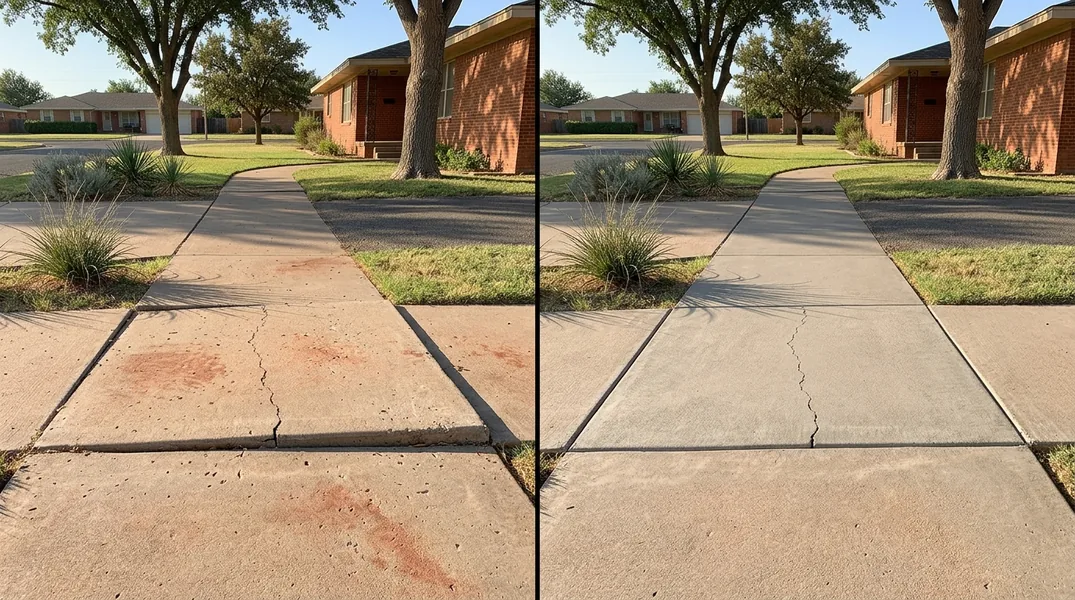
The result of this movement is predictable but devastating: playa lake clay foundation cracking in concrete driveways, patios, and slabs. Homeowners often see a single crack that starts small but grows larger year after year. Sometimes the cracks form in a pattern, with multiple sections of concrete heaving or settling at different rates. In severe cases, entire sections of a driveway can become uneven, creating a tripping hazard or making it difficult to park a vehicle. The challenge is that this isn't a problem with the concrete itself or the installation method. The problem is that the foundation beneath the concrete is unstable. Standard concrete repair approaches often fail because they don't address the root cause. Patching or resurfacing a crack won't stop the clay from moving beneath it.
Why Standard Concrete Repair Lubbock Approaches Often Fail
Many homeowners try to solve their cracking concrete problems with quick fixes. They fill cracks with caulk or concrete filler, expecting the problem to go away. For a short time, it might look better. But within months or a year, the cracks return, often worse than before. This happens because the underlying soil is still moving. Until the foundation issue is addressed, no amount of patching will provide a lasting solution.
This is where Concrete Repair & Resurfacing done by contractors who understand High Plains soil becomes invaluable. A proper repair job in Lubbock requires diagnosing whether the problem stems from caliche, playa clay, poor drainage, or a combination of factors. Depending on the diagnosis, solutions might include improving drainage systems, installing a proper base material that won't shift, or in some cases, removing and replacing the concrete with a more appropriate design. Some contractors might recommend adding soil stabilizers or adjusting the concrete mix design to handle the specific demands of High Plains soil. The key is that a one-size-fits-all approach simply won't work here.
Proper Foundation Preparation for High Plains Soil Concrete
The best way to avoid expensive concrete problems is to get the foundation right from the start. This means having a professional evaluate your soil before any concrete is poured. A thorough site assessment should identify caliche layers, test for clay content, and evaluate drainage patterns. Based on this information, a proper concrete contractor can recommend appropriate base preparation. This might include removing caliche, adding specific base materials that won't shift, installing drainage systems, or adjusting the concrete thickness and reinforcement.
For Concrete Driveways, Concrete Patios, and other projects in the High Plains region, proper base preparation typically adds to the upfront cost. Many homeowners initially balk at this expense. However, it's an investment that prevents far more costly repairs or complete replacement down the road. A driveway that costs 10 to 15 percent more to build correctly will last 20 to 30 years without major problems. A driveway built on an inadequate foundation might fail within 5 to 10 years, requiring complete removal and replacement. The math clearly favors doing it right the first time.
Getting Local Expertise for Your High Plains Concrete Project
When you're planning a concrete project in Lubbock, choosing a contractor with deep local experience isn't just convenient, it's essential. A contractor who has worked with High Plains soil for years understands the specific challenges and knows which solutions actually work. They've seen what happens when caliche and playa clay aren't properly managed, and they know how to prevent those problems. They understand local weather patterns, including how the region's dry periods and occasional heavy rains affect soil movement and concrete performance.
Lubbock Concrete Pros has built its reputation on understanding exactly these challenges. Our team has completed hundreds of projects across Lubbock and surrounding areas, and we've learned what works and what doesn't in this unique environment. Whether you're considering a new driveway, patio, or other concrete work, or whether you're dealing with cracking or settling in an existing installation, we can help. If you'd like to discuss your project and learn more about proper foundation preparation for High Plains soil, we invite you to reach out for a free estimate. You can also call us at (806) 581-0763 to speak with someone who understands your local soil challenges and can recommend the best approach for your specific situation.
Looking for a professional concrete contractor in Lubbock? Lubbock Concrete Pros responds fast for all your concrete needs.
Get a Free QuoteOur services: Concrete Driveways · Concrete Patios · Stamped & Decorative Concrete